Maritime Tech • Sustainability • Data Visualization
TIMELINE
TIMELINE
TIMELINE
2025 (Redesign)
2025 (Redesign)
TEAM
TEAM
TEAM
Engineer, Strategy Lead
Engineer, Strategy Lead
ROLE
ROLE
ROLE
UI Designer
UI Designer
SKILLS
SKILLS
SKILLS
Figma, Design Guidelines
Figma, Design Guidelines
Industry
Industry
Smart Shipping
Smart Shipping
Client
Client
Start-Up Team
Start-Up Team
Platform
Platform
Mobile App
Mobile App
OMINS
OMINS
Smarter Route to Sustainable Shipping
Smarter Route to Sustainable Shipping
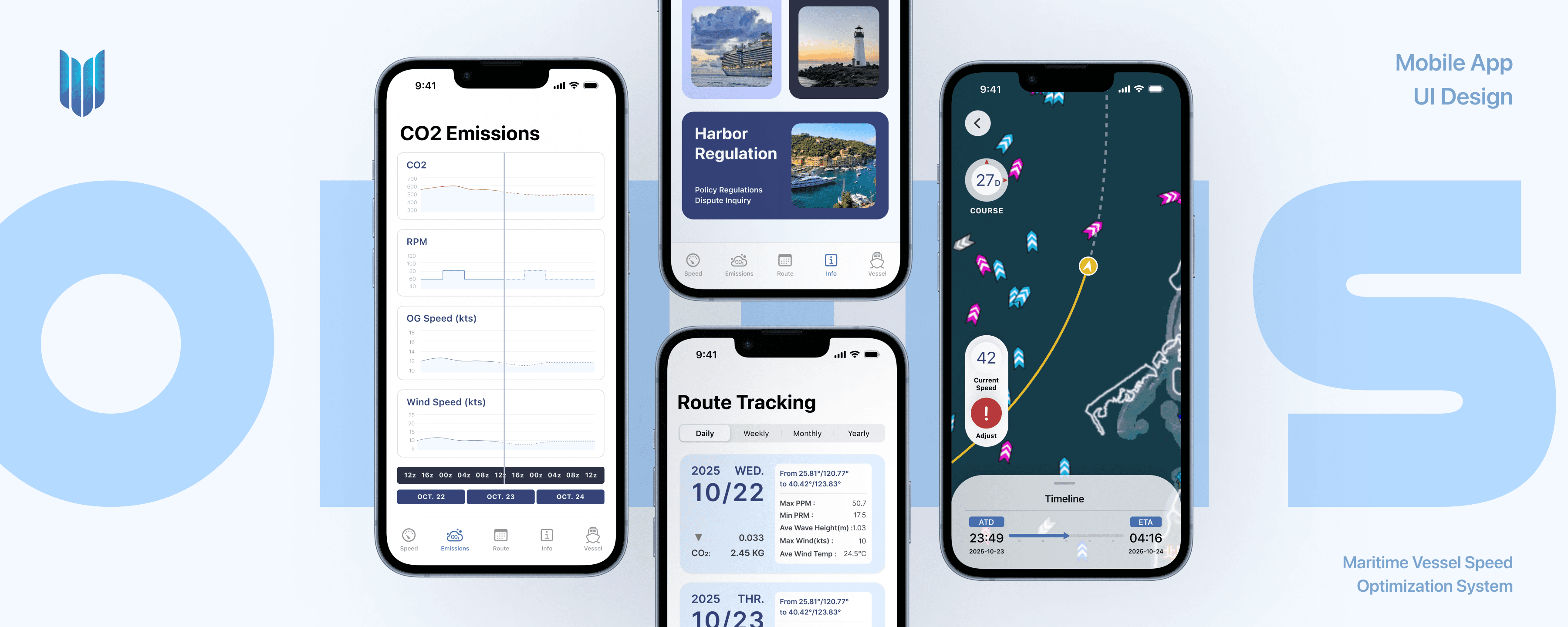
OMINS is an algorithm-based system designed to optimize vessel speed, reduce fuel consumption and carbon emissions, and help the maritime industry achieve its ESG goals in a more cost-effective way amid the rapid expansion of the global carbon trading market.
OMINS is an algorithm-based system designed to optimize vessel speed, reduce fuel consumption and carbon emissions, and help the maritime industry achieve its ESG goals in a more cost-effective way amid the rapid expansion of the global carbon trading market.
INDUSTRY CHALLENGES
INDUSTRY CHALLENGES
01
Operational Uncertainty
Operational Uncertainty
COVID-19 exposed the shipping industry’s vulnerability to external disruptions, making operational planning difficult without real-time data for decision-making.
COVID-19 exposed the shipping industry’s vulnerability to external disruptions, making operational planning difficult without real-time data for decision-making.
02
Carbon Trading Policy
Carbon Trading Policy
The rapid expansion of global carbon markets is increasing regulatory and financial pressure on shipping companies to manage emissions.
The rapid expansion of global carbon markets is increasing regulatory and financial pressure on shipping companies to manage emissions.
WHAT IS THE PROBLEM
WHAT IS THE PROBLEM
The current solution does not effectively address these challenges:
The current solution does not effectively address these challenges:

Expensive to change new vessels
Expensive to change new vessels
Replacing an existing fleet with newer, low-emission vessels requires enormous capital investment, making it an unrealistic short-term solution for most shipping operators.
Replacing an existing fleet with newer, low-emission vessels requires enormous capital investment, making it an unrealistic short-term solution for most shipping operators.

Limited load capacity
Limited load capacity
Newer eco-friendly vessels often come with design constraints that limit cargo load capacity, forcing operators to trade off between environmental compliance and operational efficiency.
Newer eco-friendly vessels often come with design constraints that limit cargo load capacity, forcing operators to trade off between environmental compliance and operational efficiency.

Time-consuming to get new vessels
Time-consuming to get new vessels
Procuring and commissioning new vessels is a lengthy process that can take years, meaning companies cannot rely on fleet replacement as a timely response to tightening carbon regulations.
Procuring and commissioning new vessels is a lengthy process that can take years, meaning companies cannot rely on fleet replacement as a timely response to tightening carbon regulations.
SOLUTION
SOLUTION
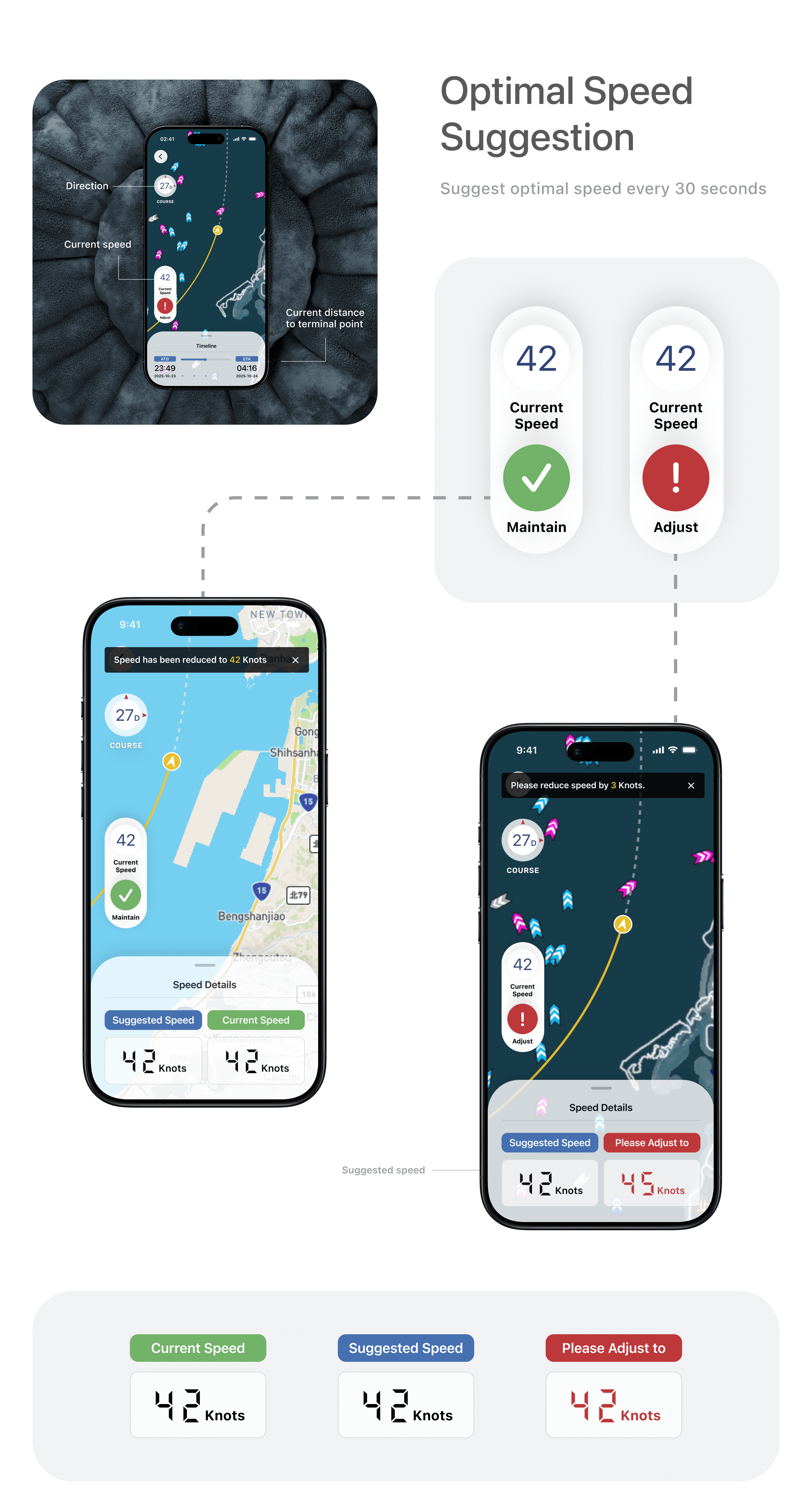
Translates operational constraints into optimized decisions.
Translates operational constraints into optimized decisions.
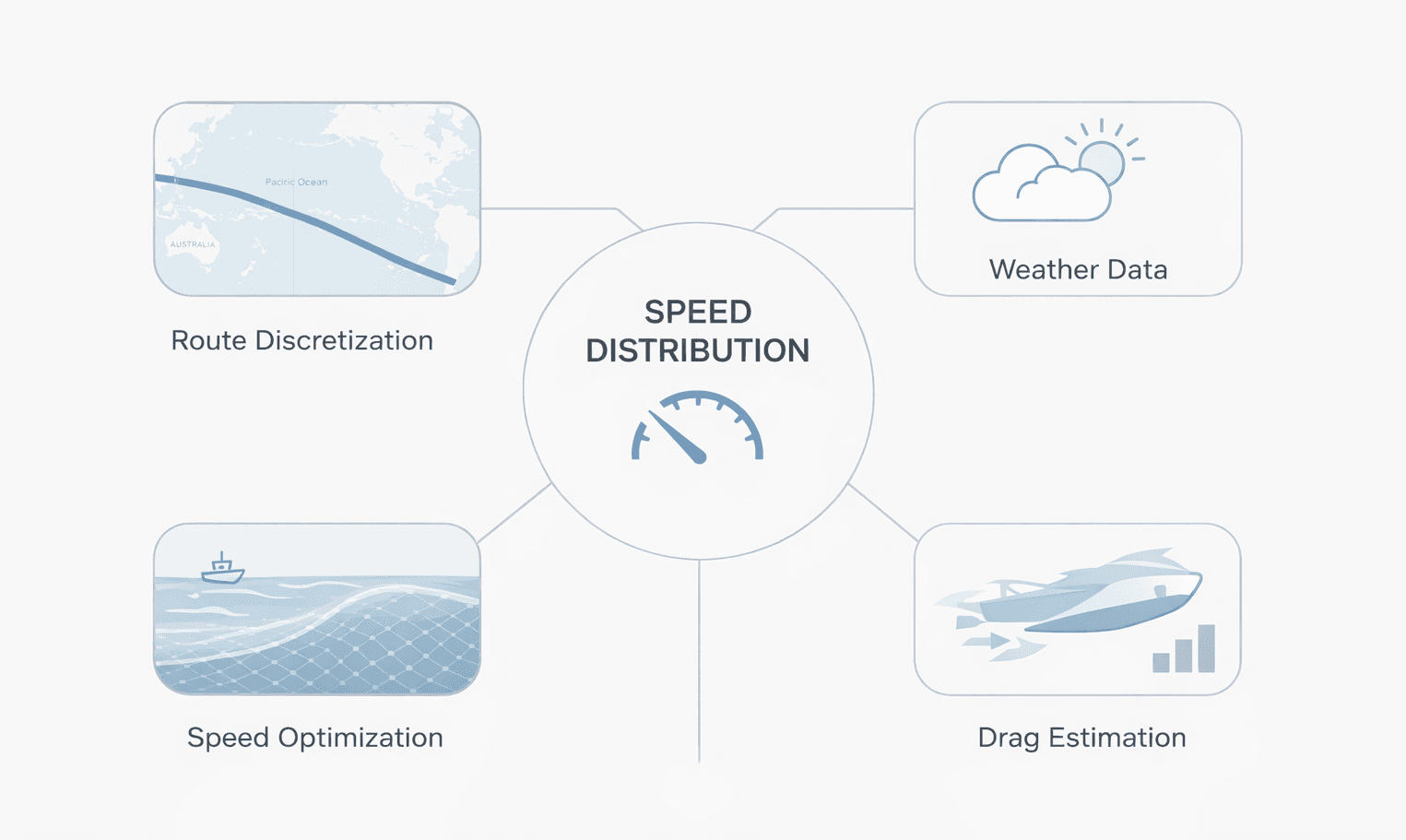
OMNIS operates on a straightforward input-output logic designed to support smarter, more sustainable voyage planning. By providing three key inputs — the designated route, vessel parameters, and target arrival time — and the system's speed distribution algorithm processes these variables to generate three actionable outputs:
OMNIS operates on a straightforward input-output logic designed to support smarter, more sustainable voyage planning. By providing three key inputs — the designated route, vessel parameters, and target arrival time — and the system's speed distribution algorithm processes these variables to generate three actionable outputs:
Recommended
Sailing Speed
Recommended
Sailing Speed
Recommended
Sailing Speed
Estimated Carbon
Emissions
Estimated Carbon
Emissions
Estimated Carbon
Emissions
Projected Fuel
Consumption
Projected Fuel
Consumption
Projected Fuel
Consumption
This allows operators to make informed decisions that balance punctuality, fuel efficiency, and carbon compliance in a single calculation.
This allows operators to make informed decisions that balance punctuality, fuel efficiency, and carbon compliance in a single calculation.
DESIGN
DESIGN
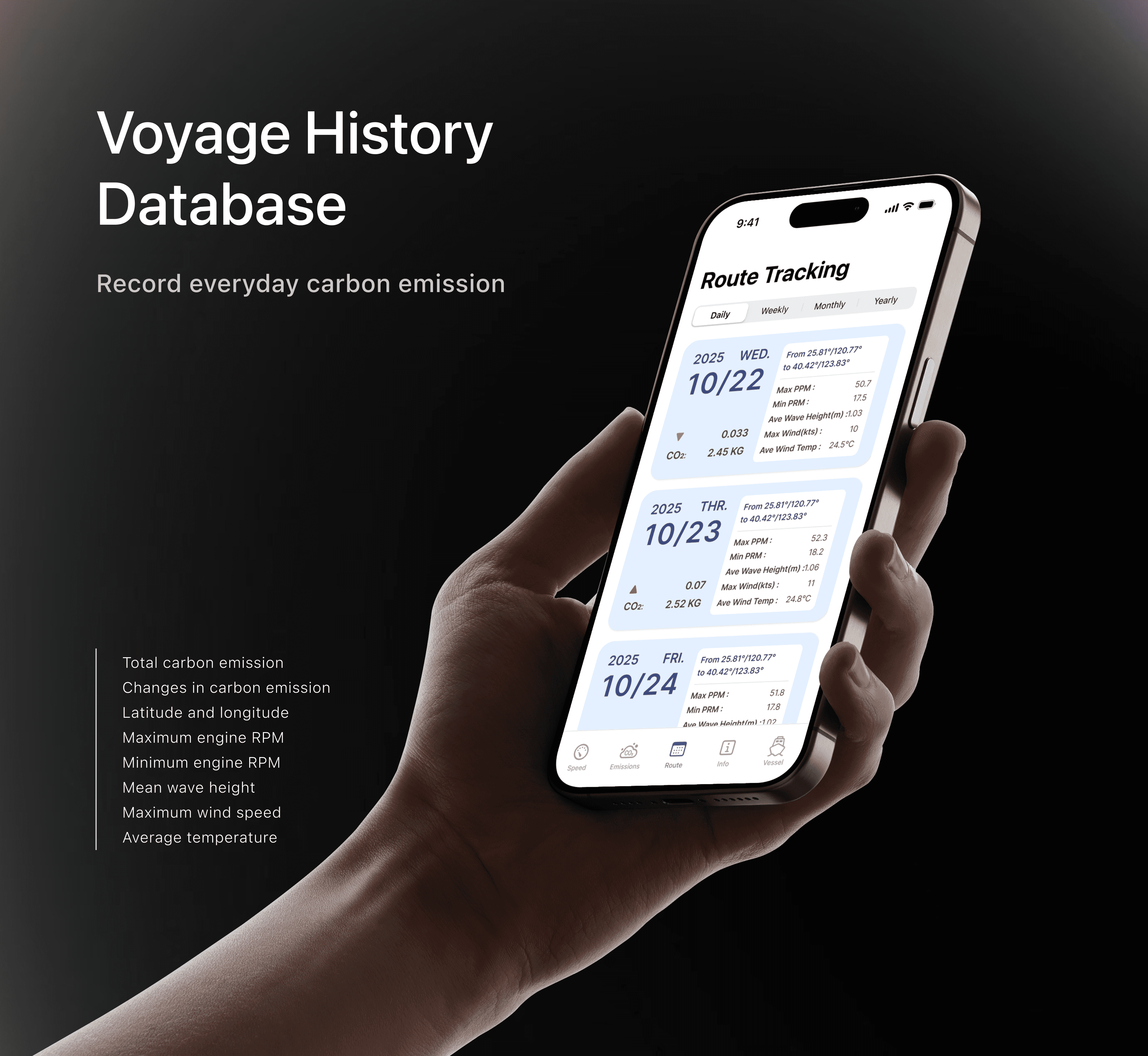
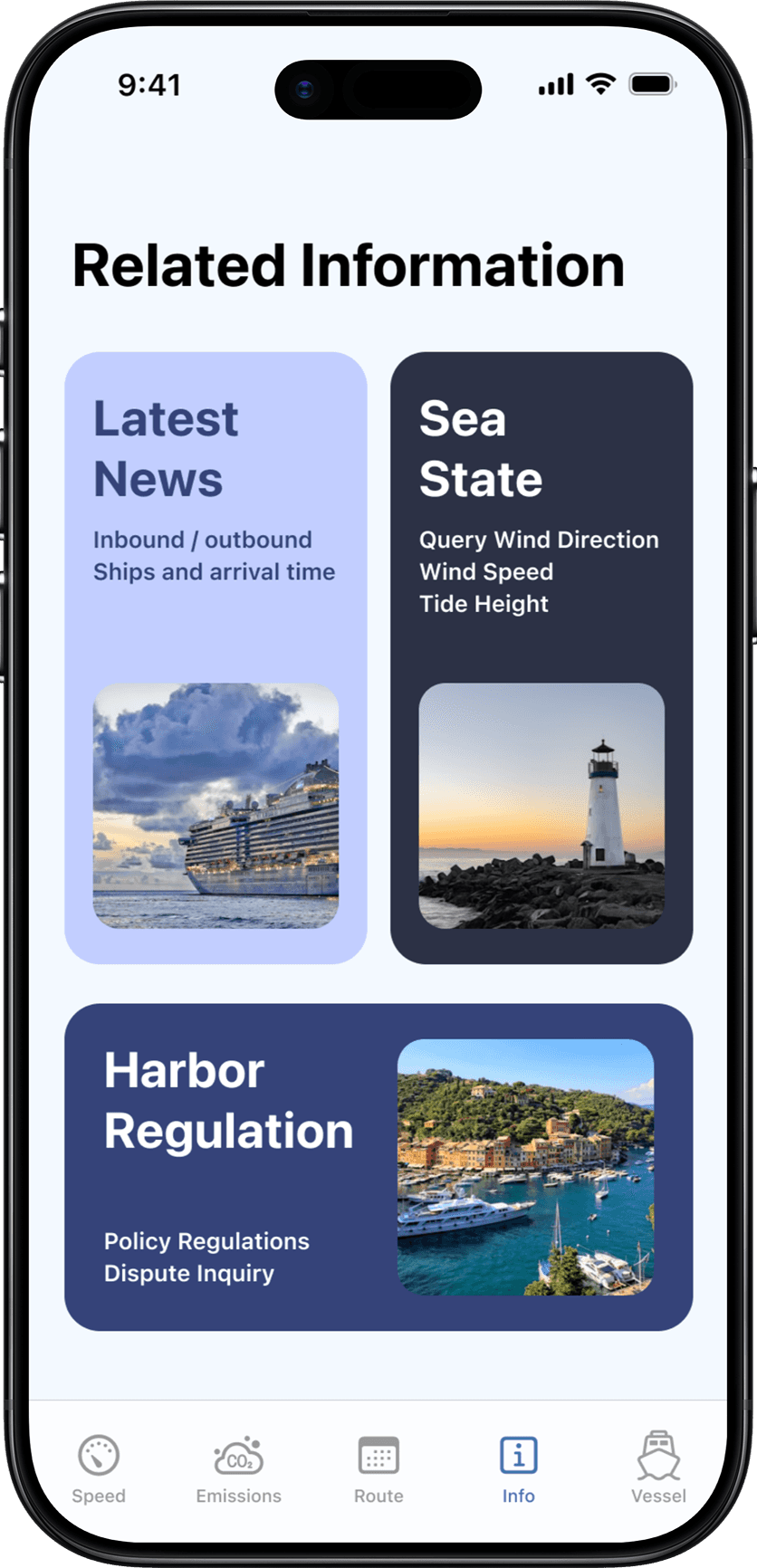
Related Information
Stay informed on the latest shipping regulations and port updates, enabling operators to respond quickly to policy changes and avoid compliance risks.
Stay informed on the latest shipping regulations and port updates, enabling operators to respond quickly to policy changes and avoid compliance risks.
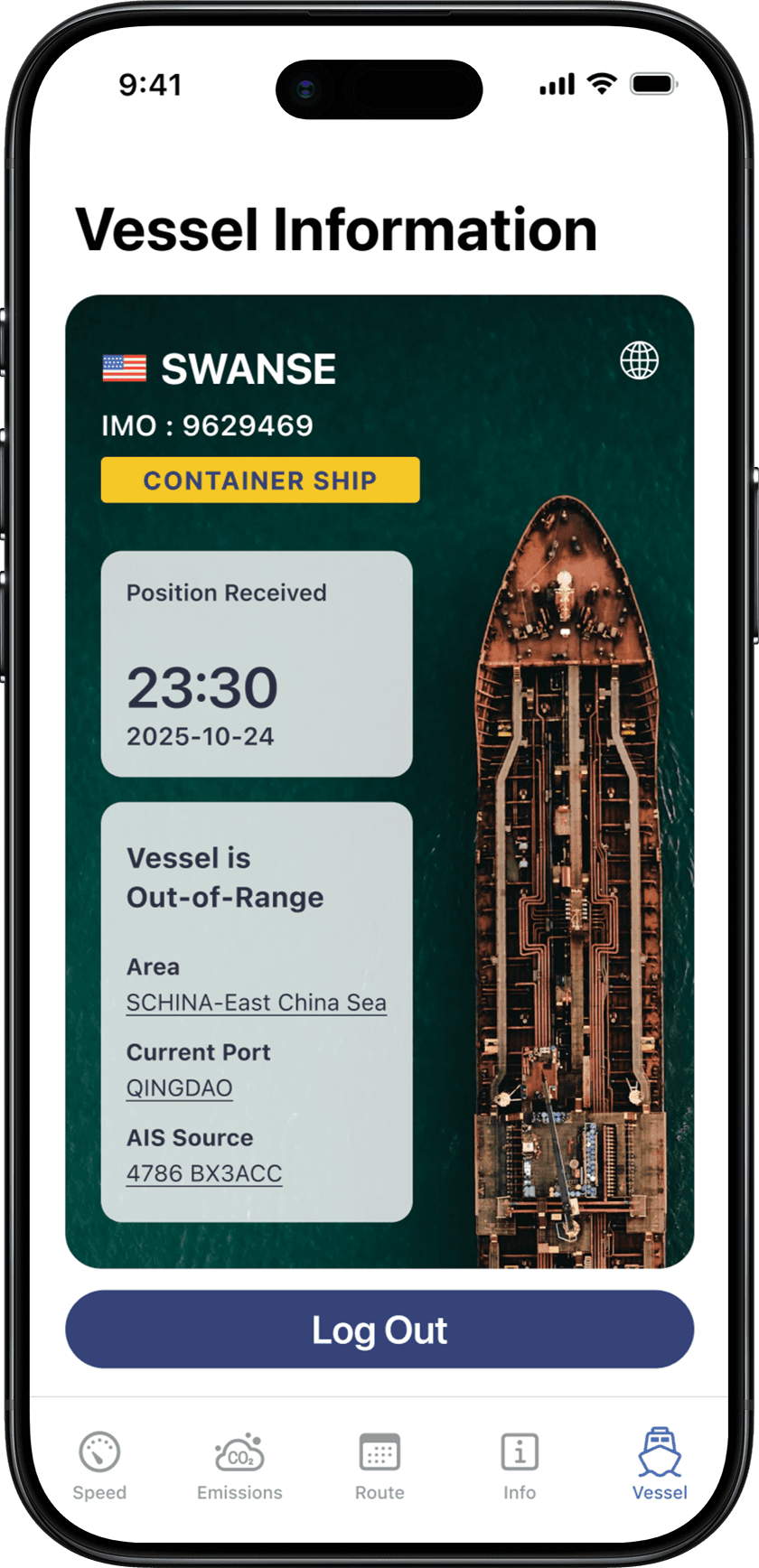
Vessel Information
Register and bind their vessel by entering key identification details, allowing the system to automatically load the ship's parameters for subsequent route planning and emissions calculation.
Register and bind their vessel by entering key identification details, allowing the system to automatically load the ship's parameters for subsequent route planning and emissions calculation.
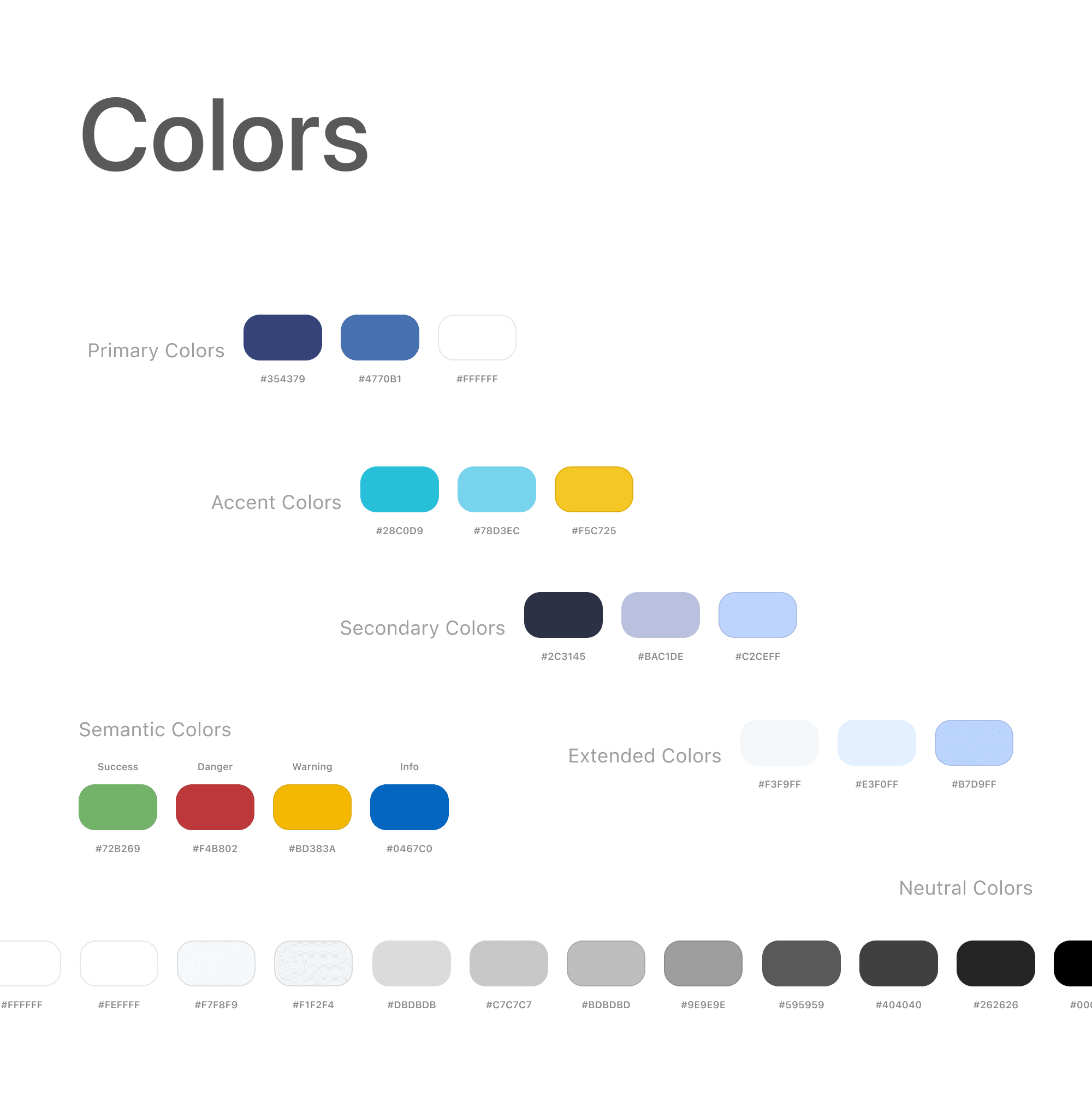
DESIGN GUIDELINE
DESIGN GUIDELINE

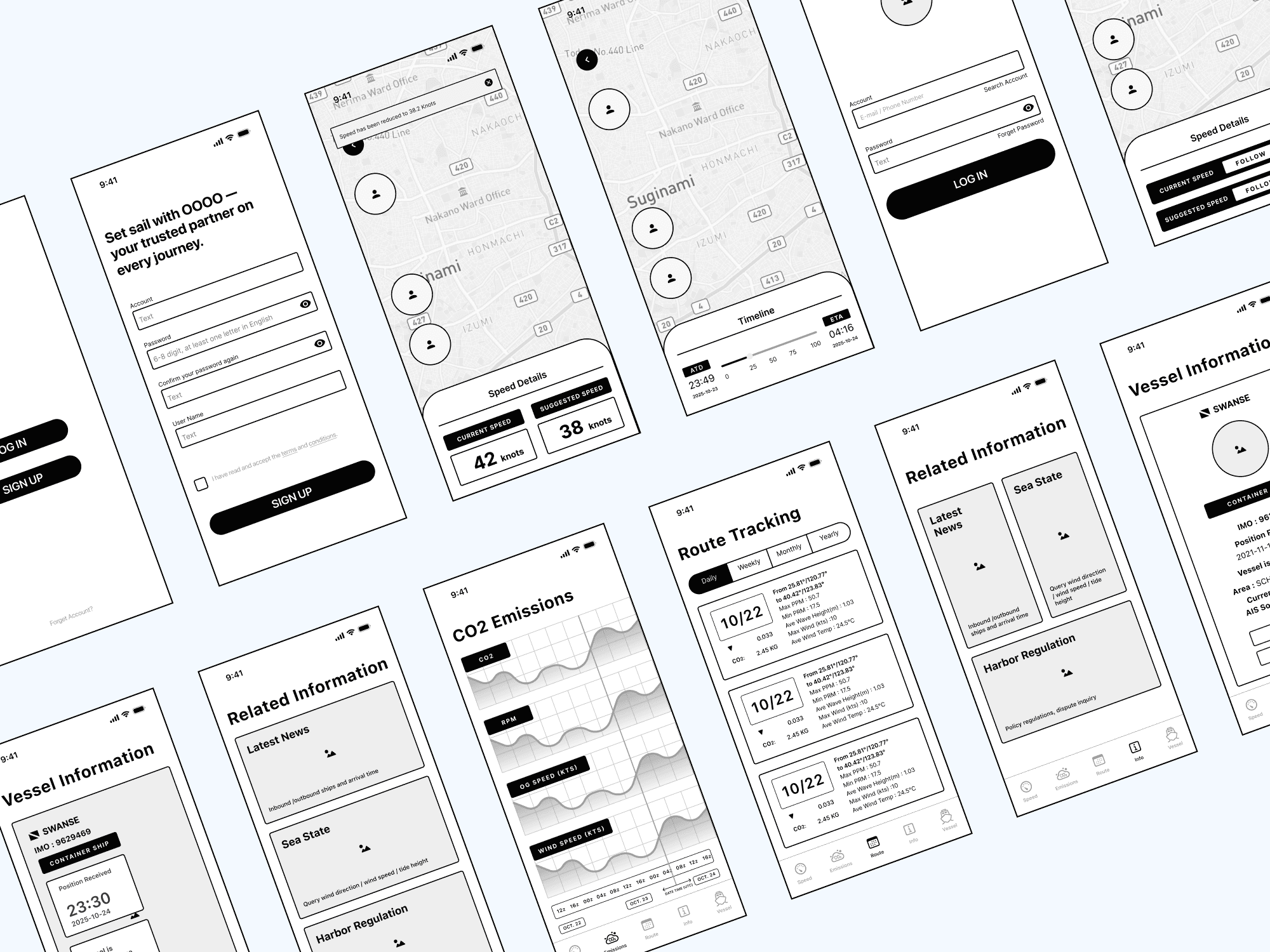
WIREFRAME
WIREFRAME
LEARNINGS
LEARNINGS
Data Visualization
Data Visualization
Working with dense maritime data on a small screen taught me that clarity is a design decision, not just a layout problem. Every chart, number, and label had to earn its place — I found myself constantly asking "does the operator need this right now?" rather than trying to show everything at once. This shifted how I think about information hierarchy in data-heavy interfaces.
Working with dense maritime data on a small screen taught me that clarity is a design decision, not just a layout problem. Every chart, number, and label had to earn its place — I found myself constantly asking "does the operator need this right now?" rather than trying to show everything at once. This shifted how I think about information hierarchy in data-heavy interfaces.
Restraint as a
Design Principle
Restraint as a
Design Principle
Designing for a data-heavy, task-critical context made me reconsider the role of visual embellishment. It kept me coming back to the same question: Is this helping the operator, or just making the screen busier? This project reinforced that in tool-based products, a calm and legible interface is the craft — restraint isn't a lack of design, it's a deliberate decision to get out of the user's way.
Designing for a data-heavy, task-critical context made me reconsider the role of visual embellishment. It kept me coming back to the same question: Is this helping the operator, or just making the screen busier? This project reinforced that in tool-based products, a calm and legible interface is the craft — restraint isn't a lack of design, it's a deliberate decision to get out of the user's way.
Thank you for reading.
CHECK OUT MORE